October 09, 2026



Most new dog owners start on the same few local routes: the towpath, the field path behind the estate, the wood everyone calls the bluebell wood even though nobody can agree which parish it sits in. These are shared spaces, used by farmers, riders, runners, families and wildlife, and the mistakes that cause real trouble are rarely dramatic. They are small, repeated and entirely avoidable.
None of it demands a qualification. A bit of foresight and a decent lead is most of the job. Here are the errors that come up again and again on countryside trails, and what to do instead.
A public footpath across a farm is still private land. You have the right to pass; your dog's freedom to roam is not part of the deal. On open access land, dogs must be on a lead at all times between 1 March and 31 July, to protect ground-nesting birds, and near livestock at any time of year. Plenty of nature reserves, estates and reservoir routes ask for leads all year round, and some exclude dogs altogether.
“Under control” has a specific meaning here. It does not mean your dog usually comes back. It means you can recall it first time, every time, when a lamb, a horse or a cyclist appears without warning.
Try it somewhere enclosed and dull, with nothing worth chasing. If the honest answer is “mostly”, the lead stays on. There is no shame in that, and plenty of experienced owners never let their dogs off on trails at all.
Read the signs, too. Where a route is waymarked, the code for that path is usually on the gate or the post at the entrance, and checking it takes ten seconds. It is also worth knowing that the rules can change from one field to the next, so a dog that was fine off the lead on the common may need clipping on the moment you cross onto the estate.
Sheep with lambs, cows with calves and horses in a field cause more incidents than anything else. Worrying livestock is an offence even when the dog never makes contact, and chasing counts. A dog that runs at a ewe can separate a lamb from its mother or worse, and you will not be forgiven for it. Farmers are entitled to protect their animals.
Walk around the edge of a field rather than straight through the middle. Give stock a wide berth, and put the lead on before you enter the field, not after something has gone wrong. Never let a dog approach a horse, even a quiet one. Horses kick first and ask questions later.
It helps to read the field before you commit to it. If the sheep are bunched tight in the corner nearest the gate, they are already uneasy about something, and adding a dog to that is asking for trouble. If there are lambs lying flat in the grass where you cannot see them, the safest line is the one along the hedge, not the one across the middle.
Cattle are curious, and a group of heifers moving in your direction is unsettling even for people who grew up around them. Walk calmly to the side of the field and away. If the situation becomes genuinely dangerous, the usual advice is to let your dog off the lead so you can both get clear, because an on-lead dog can pull you into the middle of the herd. Do not run, and do not try to shoo them off.
The most common sight on any well-used trail is a bright green bag hanging from a hawthorn branch like a small, horrible decoration. The intention is almost always good: the owner means to pick it up on the way back. In practice they forget, or they come back a different way, or the bag splits in the rain and the contents end up exactly where they were going to end up anyway.
Bag it, carry it, bin it. If there is no bin for three miles, a tied bag in a pocket or clipped to the lead is unpleasant for a while; a bag on a fence post stays for months and does more damage to how dog walkers are viewed than almost anything else. Bagging it and leaving it is worse than not bagging it at all, because someone else now has to deal with your rubbish.
Most lead trouble is about length rather than aggression. A few habits make shared routes far easier:
None of this is about being precious. It is about being predictable, which is what everyone else on the path is silently hoping for.
Leave every gate as you find it. Open gates stay open, closed gates stay closed, because a closed gate is usually holding something in. Put the dog on the lead about twenty metres before you reach the gate rather than wrestling with a clip while someone waits behind you.
Go through one at a time. If there are two of you, one manages the dog while the other handles the gate. Do not let a dog squeeze under a gate into a field you cannot legally enter; if it goes through, you may be the one walking the long way round to fetch it. Lift small dogs over stiles, let bigger ones step over rather than jump, and never haul a dog through a kissing gate by the lead. A frightened dog on a stile is how people get bitten.
A path that is a pleasant amble in June can be a knee-deep bog in January, and the hazards change just as fast. The ones worth knowing about:
Experienced walkers do this on autopilot, and it is the single easiest habit to copy:
That is the whole job, really. Keep the dog close where it needs to be close, leave the place as you found it, and assume that everyone else on the path — the farmer, the rider, the runner with headphones in — is having a worse day than you. Do that, and the trail stays open to you, which is the only thing that matters in the long run.
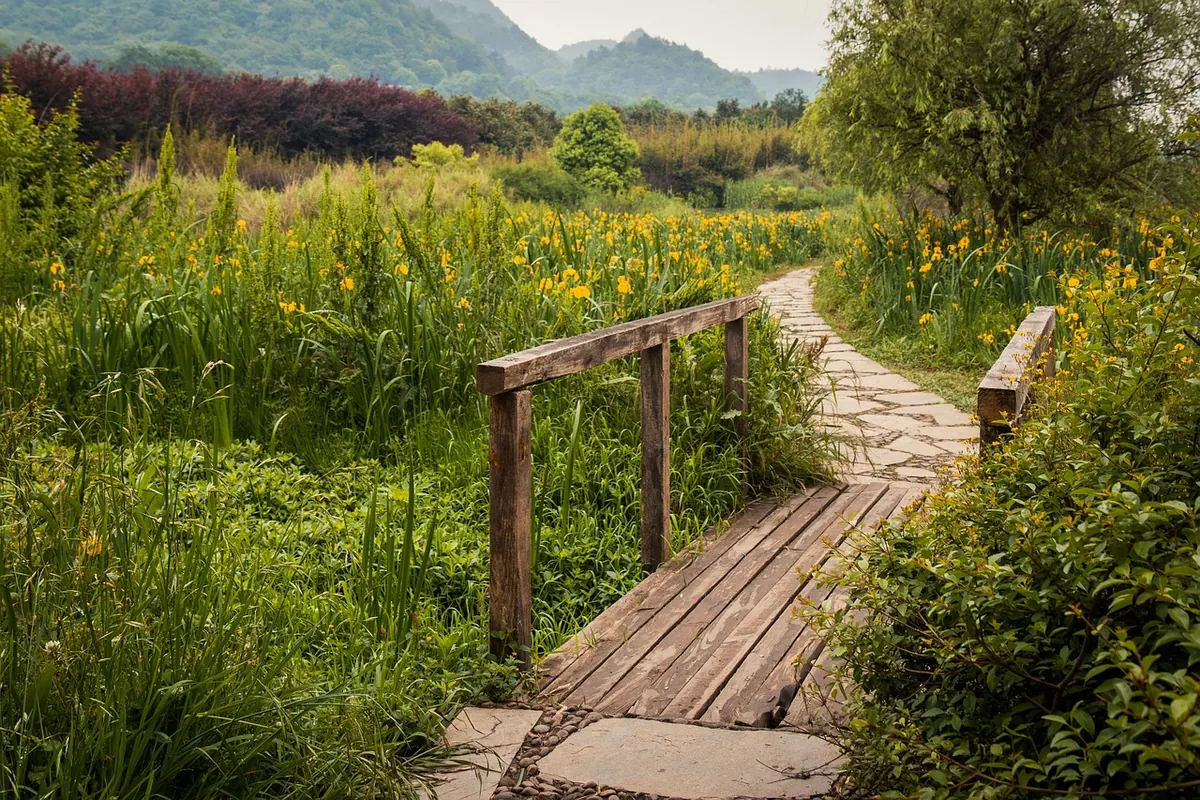
Photo: YangGuangWu / Pixabay
Local news and stories from the Cairn community.
Copyright © 2026 Cairn Times. All rights reserved. Cairn Times.